
Description
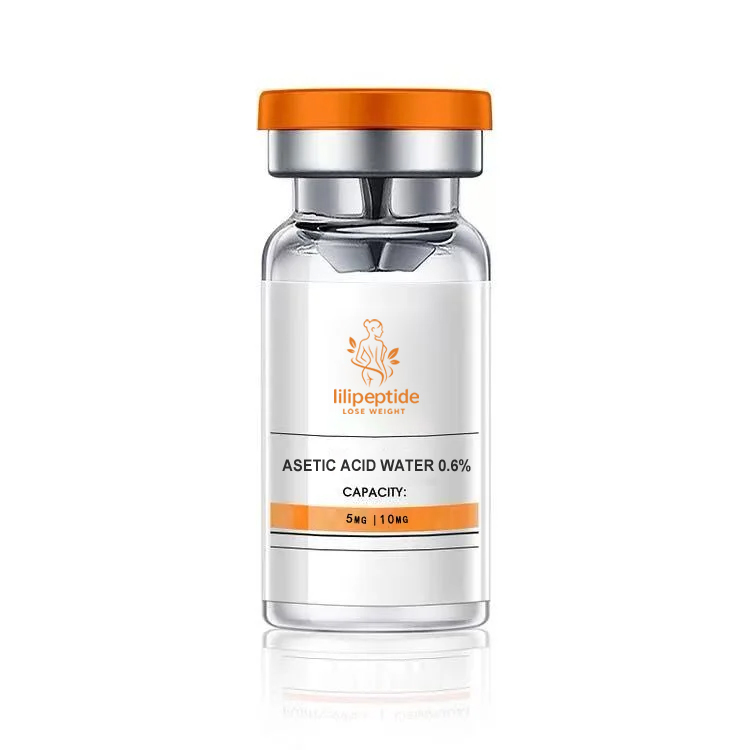
Asetic Acid Water 0.6%
Asetic Acid Water 0.6% is the chemical compound with the formula CH₃COOH. It is the active component in vinegar and gives it its characteristic sour taste and pungent odor.
Properties:
- Molecular weight: 60.05 g/mol
- pKa: 4.76 (in water)
- Boiling point: 118°C
- Clear, colorless liquid
- Characteristic pungent odor
Why 0.6%?
The 0.6% concentration provides:
- Mild pH Adjustment: Gentle acidification without being harsh
- Peptide Solubility: Optimal pH for most peptide solubility
- Stability Maintenance: pH range that preserves peptide integrity
- Tissue Tolerance: Well-tolerated at injection sites
This concentration creates a solution with approximately pH 2.6-2.9, which is effective for peptide stabilization but generally well-tolerated in subcutaneous injections.
Role in Peptide Formulations
pH Control
The primary function of acetic acid water is pH control:
- Maintains acidic pH optimal for peptide stability
- Prevents degradation of sensitive peptides
- Ensures consistent potency throughout shelf life
Solubility Enhancement
Many peptides require specific pH ranges for optimal solubility:
- Acidic pH can improve solubility of cationic peptides
- Maintains peptides in solution form
- Prevents precipitation
Stability Protection
Acetic acid helps protect peptides against:
- Oxidation
- Hydrolysis
- Microbial growth (contributes to overall preservation)
Technical Specifications
Concentration Details
The 0.6% solution represents:
- 0.6 grams acetic acid per 100 mL solution
- Equivalent to approximately 0.1 M (molar) concentration
- Provides pH approximately 2.6-2.9
Quality Standards
Pharmaceutical-grade acetic acid must meet:
- USP (United States Pharmacopeia) standards
- Sterility requirements
- Purity ≥99%
- Heavy metal testing
Safety Profile
Generally Recognized as Safe
At 0.6% concentration:
- Well-tolerated at injection sites
- Does not cause significant tissue damage
- Rapidly diluted and buffered in tissues
- No systemic toxicity at this concentration
Common Effects
Most patients experience no notable effects:
- Rare: Mild, transient injection site sensation
- Very rare: Localized irritation
Comparisons to Other Acids
| Acid | Concentration | pH Range | Notes |
|---|---|---|---|
| Acetic | 0.6% | 2.6-2.9 | Common in peptides |
| Hydrochloric | Variable | 1-3 | Stronger acid |
| Phosphoric | Variable | 2-4 | Buffering capacity |
Storage and Stability
Storage Requirements
- Room temperature typically acceptable
- Protect from contamination
- Use within labeled expiration
- May require refrigeration after opening
Stability Contribution
Acetic acid water contributes to formulation stability:
- Extends shelf life
- Maintains potency
- Prevents degradation
Common Questions
Is Acetic Acid Harmful at This Concentration?
No, at 0.6%, acetic acid is well-tolerated and considered safe for pharmaceutical use.
Will It Affect My Peptide?
At 0.6%, acetic acid is optimized to protect peptides rather than degrade them. It maintains pH in the optimal range for peptide stability.
What’s the Difference from Vinegar?
Vinegar is typically 5-6% acetic acid. The 0.6% solution is approximately 10x more dilute than typical vinegar.
Is It Vegan?
Yes, acetic acid can be synthesized and is vegan-friendly.
Formulation Considerations
pH Optimization
Different peptides require different pH ranges:
- Acidic peptides: May need lower pH
- Basic peptides: May tolerate slightly higher pH
- pH 3-5 range often optimal for peptide stability
Buffering
The weak acid nature of acetic acid provides:
- Gentle buffering action
- pH stability over time
- Reduced risk of extreme pH
Conclusion
Acetic acid water 0.6% serves as a standard, well-established pH adjuster and solvent in peptide formulations. Its primary functions include maintaining appropriate pH for peptide stability and solubility, ensuring formulation integrity, and supporting overall product safety.
Key points:
- Provides acidic pH optimal for peptide stability
- Generally well-tolerated at injection sites
- Supports formulation sterility and shelf life
- GRAS (Generally Recognized as Safe) status
The use of dilute acetic acid is a standard pharmaceutical practice that ensures peptide formulations remain stable, effective, and safe throughout their shelf life.
Reviews
There are no reviews yet.